- 613-421-0505
- info@atlantistilesandflooring.co
A lobby floor can make a strong first impression at 8 a.m. and look worn out by 3 p.m. if it was chosen for appearance alone. Knowing how to select commercial flooring means balancing the look you want with the conditions the floor will face every day: foot traffic, spills, cleaning routines, rolling loads, noise, and the expectations of employees and visitors.
The right material is not always the most expensive one, nor is it necessarily the one with the highest wear rating. A polished showroom, busy medical office, restaurant kitchen, and rental-apartment corridor have very different needs. The best choice begins with a clear picture of how each space actually works.
Before comparing samples, look at the daily activity in the room. Consider who uses the area, how often they enter, what they bring in from outdoors, and what happens when something spills. An entrance that sees rain, snow, road salt, and grit requires a different flooring plan than a private executive office.
Traffic is more than the number of people walking through a space. Rolling office chairs, carts, wheelchairs, strollers, delivery equipment, and furniture movement can create concentrated wear. In retail environments, shoppers may pause in the same high-visibility areas. In schools and clinics, repeated cleaning and disinfecting can be as demanding as foot traffic.
It helps to divide the project into zones. Entryways, hallways, reception areas, washrooms, staff rooms, sales floors, and storage areas do not need to use the same flooring. Using a more resilient material in hard-working zones and a more design-focused option in quieter areas can improve both performance and budget control.
Once you understand the space, narrow the choices by the performance factors that matter most. This step prevents a common mistake: selecting a surface that looks right in a sample but is poorly suited to the environment.
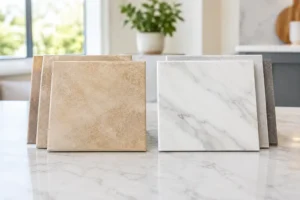
Water is one of the first factors to rule materials in or out. Ceramic or porcelain tile is a dependable choice for washrooms, entrances, food-service areas, and spaces where frequent wet cleaning is expected. Proper grout selection, slip resistance, and installation preparation are essential, especially in commercial settings.
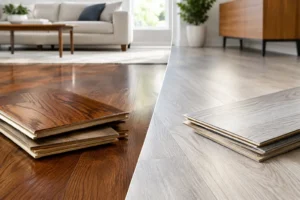
Luxury vinyl tile and luxury vinyl plank are also practical options for many commercial interiors. They offer water resistance, a broad range of wood and stone visuals, and a comfortable walking surface compared with tile. However, not every vinyl product is designed for heavy commercial traffic, so product specifications and wear-layer thickness should be reviewed carefully.
Hardwood can bring warmth and distinction to offices, hospitality settings, and upscale retail spaces, but it is less forgiving around standing water and frequent spills. Engineered hardwood may offer greater dimensional stability than solid hardwood, yet neither should be treated as a replacement for moisture-resistant flooring in wet zones.
Commercial floors need to handle more than scuffs. Think about dropped merchandise, chair legs, filing cabinets, display fixtures, and equipment. Tile is highly resistant to scratching and wear, though hard impacts can chip it. Commercial-grade vinyl can manage daily traffic well while offering more underfoot comfort and easier replacement of individual damaged sections.
Laminate can be cost-effective for certain low- to moderate-traffic commercial spaces, particularly offices or tenant improvements where moisture exposure is controlled. Its durability varies widely by product, and seams can be vulnerable if water is allowed to sit. Choosing a commercial-rated laminate and following installation requirements are both critical.
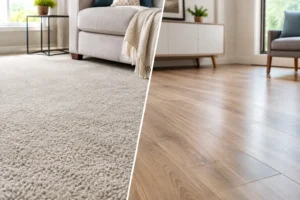
Carpet remains a smart choice where acoustic comfort matters. Offices, meeting rooms, hospitality spaces, and multifamily common areas can benefit from carpet tile or commercial broadloom designed to resist staining and crushing. Carpet reduces sound transfer and feels welcoming, but it requires a realistic plan for vacuuming, spot treatment, and periodic deep cleaning.
A floor should support safe movement, not create an avoidable hazard. In areas exposed to water, choose products with appropriate slip resistance and pair them with effective entrance matting. Texture can improve traction, although heavily textured surfaces may take more effort to clean.
Comfort matters too. Employees who stand for long periods may appreciate the resilience of vinyl or carpet in appropriate areas. Tile offers excellent durability and a clean, professional appearance, but it is harder underfoot. The best solution may combine materials rather than forcing one product across every room.
A low-maintenance floor is not one that never needs attention. It is one that fits the cleaning staff, equipment, and schedule available at your property. This distinction affects long-term appearance as much as the material itself.
Tile generally handles regular wet cleaning well, but grout must be maintained and may need sealing depending on the product and environment. Vinyl is often straightforward to clean, yet abrasive cleaners, excessive water, or improper finish maintenance can shorten its life. Carpet needs frequent vacuuming to remove grit before it works its way into the fibers.
Ask practical questions early. Will staff clean the floor daily? Are there entry mats to capture moisture and debris? Is there a plan for salt during winter conditions? Will spills be addressed immediately? A floor that performs well with routine care is usually a better investment than a beautiful material that requires maintenance your operation cannot consistently provide.
Commercial flooring should contribute to the character of the space without becoming difficult to live with. Lighter colors can make a compact office or reception area feel open, while medium tones and patterned materials are often more forgiving of dust and daily marks. Wood-look vinyl, tile, and laminate can add warmth without requiring the same level of care as natural hardwood.
Consider visual continuity as customers move through the property. Flooring can help define zones, direct traffic, or create a calmer transition from a busy entry to a private meeting area. In a healthcare or senior-living setting, contrast between the floor, walls, and transitions can also support easier wayfinding.
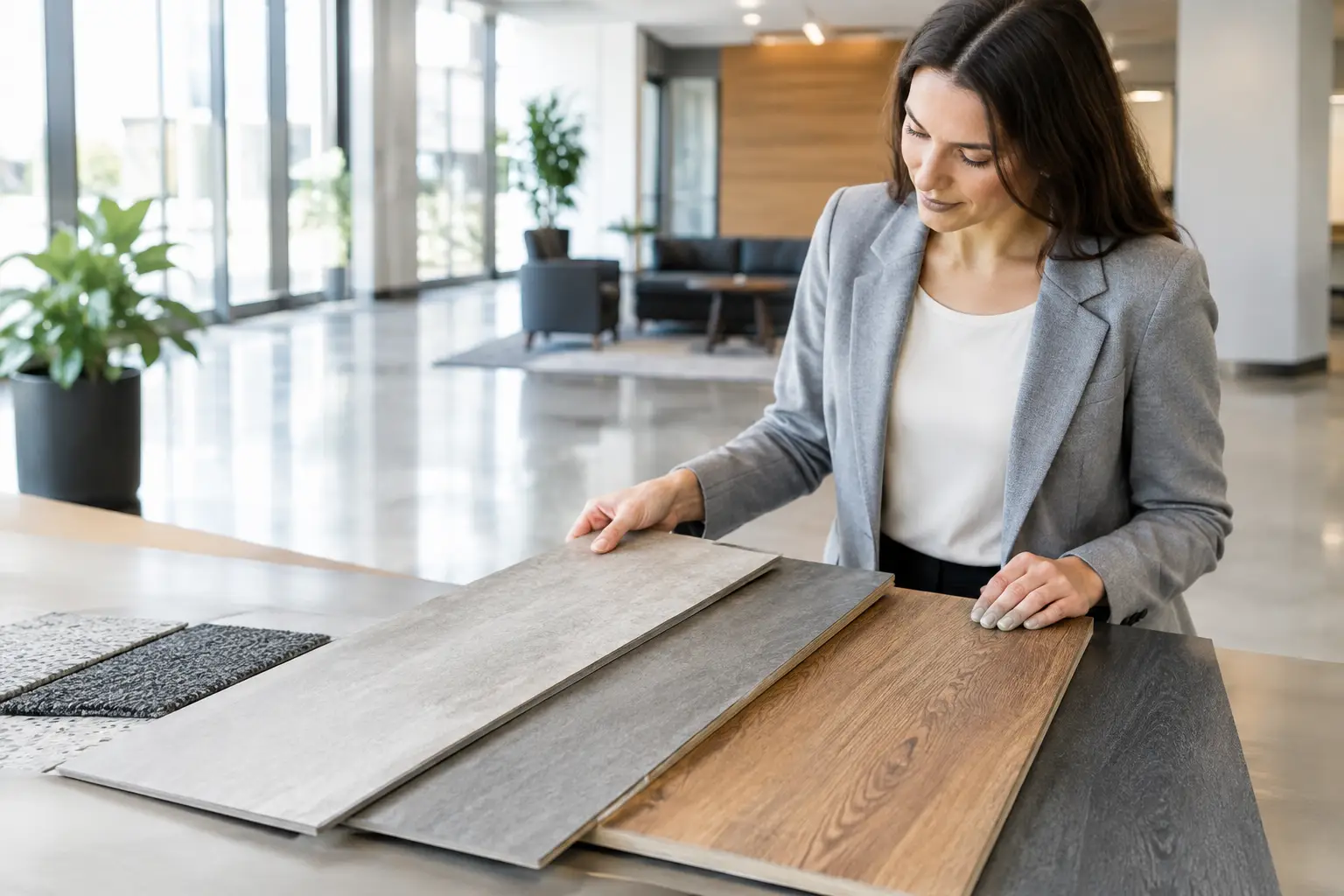
Samples should be viewed under the actual lighting in the space. A color that looks balanced under showroom lighting may appear cooler, darker, or more reflective under office LEDs or daylight. Review larger samples whenever possible, especially for patterned carpet, stone-look tile, and plank flooring with natural variation.
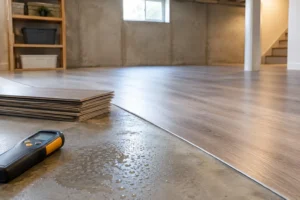
Material price is only one part of a commercial flooring budget. Include removal of existing flooring, subfloor repairs, moisture testing, floor preparation, transitions, baseboards, adhesives, delivery, downtime, and professional installation. Skipping preparation to lower the initial estimate can lead to premature failure, visible imperfections, or warranty concerns.
Installation timing also has a cost. Some materials require acclimation, curing time, or restricted access after installation. If a business must stay open, phased work may be necessary. That can be worthwhile, but it should be planned before the material is ordered.
Manufacturer installation standards matter because commercial floors face higher demands. Subfloor flatness, moisture levels, adhesive selection, expansion allowances, and transition details all affect the finished result. Professional installation helps protect the appearance, performance, and warranty eligibility of the flooring you choose.
Before making a final decision, compare products beyond their color and price. Confirm the product’s commercial use rating, warranty terms, recommended cleaning methods, moisture limitations, and installation requirements. For vinyl and laminate, check wear-layer or abrasion information. For carpet, review fiber type, stain resistance, backing, and density. For tile, consider slip resistance, grout performance, and replacement availability.
It is also wise to order enough material for future repairs when a specific dye lot, tile batch, or plank style is important. Commercial spaces evolve, and having matching product available can make later repairs much less noticeable.
A free estimate and on-site review can reveal conditions that are easy to miss from a floor plan, such as uneven concrete, existing moisture concerns, door-clearance issues, or the need for specialized transitions. Atlantis Tiles and Flooring can help property owners compare materials and installation requirements before those details become expensive surprises.
The floor beneath a business should do quiet, dependable work every day. Choose the option that suits the people, traffic, cleaning routine, and visual standard of the space, then give it the preparation and installation it deserves.