- 613-421-0505
- info@atlantistilesandflooring.co
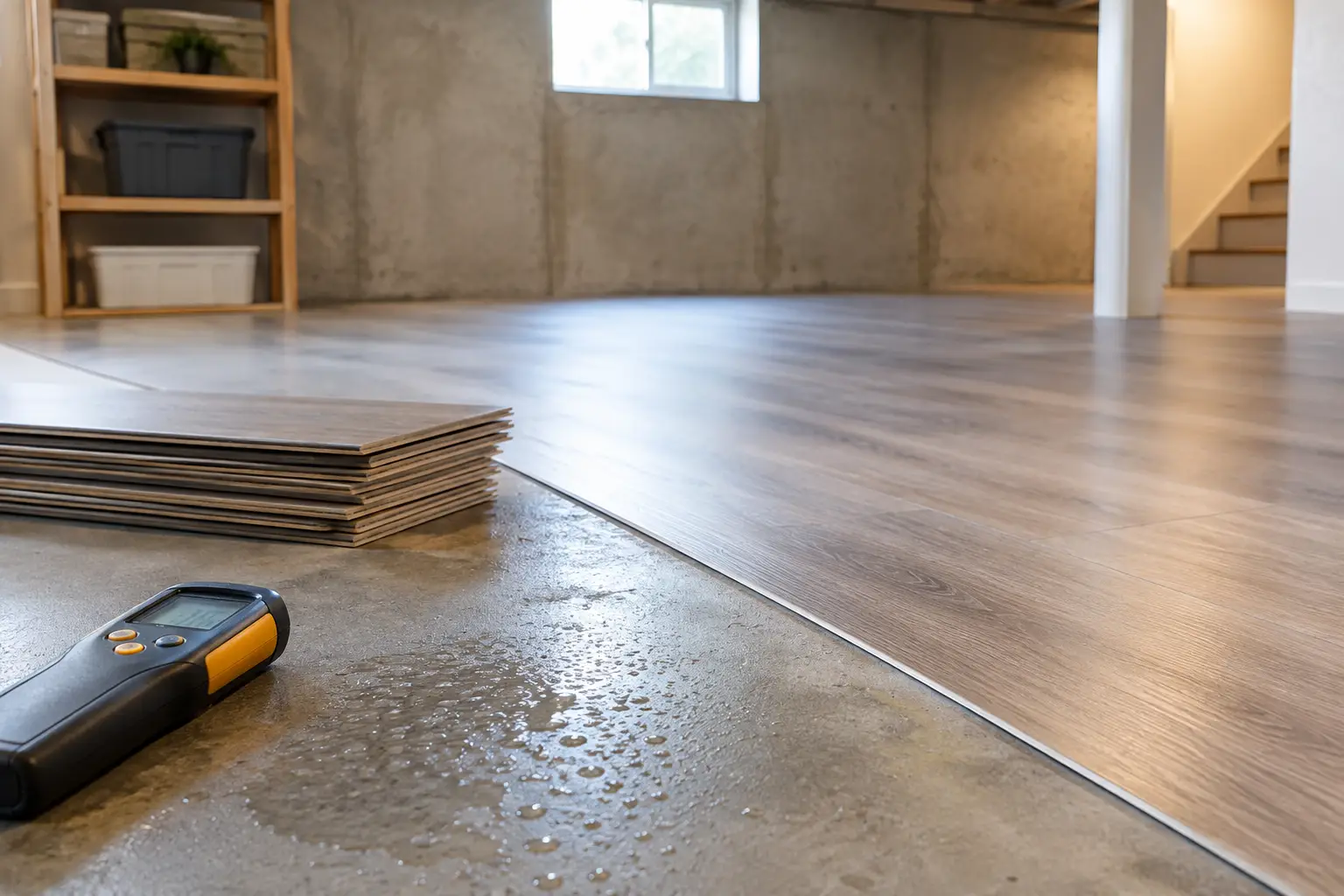
A finished basement can add valuable living space, but the floor has to handle conditions that do not exist upstairs. This basement moisture flooring guide explains how to evaluate moisture before choosing a material, so your new floor looks polished and performs well for years.
In Ottawa and other regions with wet springs, snowmelt, and changing temperatures, a basement slab can hold or transmit moisture even when the room feels dry. Choosing flooring based only on color, price, or comfort can lead to peeling adhesives, warped planks, mold concerns, or a musty smell. The best result starts below the finished surface.
A concrete slab is not naturally waterproof. Concrete is porous, which means water vapor in the soil can move through it over time. Moisture can also enter a basement through foundation cracks, poor grading, leaking window wells, plumbing issues, or a sump pump that is not keeping up during heavy rain.
Before installing any flooring, look for signs of an active moisture problem. Water stains, white mineral deposits on concrete, peeling paint, damp baseboards, a persistent odor, or visible mold should be addressed before the flooring work begins. Flooring materials are not a substitute for foundation repairs or drainage improvements.
This is also the point to consider how the room will be used. A climate-controlled guest room has different needs than a busy family recreation room, laundry area, rental suite, or commercial storage space. The right moisture strategy should match both the condition of the basement and the demands of the space.
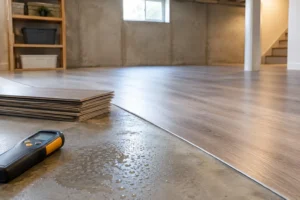
A slab that looks clean and dry may still have a moisture-vapor issue. Professional installers use appropriate moisture testing methods and follow the requirements set by the flooring manufacturer. Those requirements matter because a product warranty may depend on using the correct test, underlayment, adhesive, and moisture-control system.
Simple plastic-sheet tests can reveal obvious condensation, but they are not a replacement for manufacturer-approved testing. They can be useful as an early warning sign, especially in an older basement, but they do not measure whether the slab meets installation standards.
A proper assessment also checks slab flatness, cracks, surface contamination, and the height available at doors and stairs. Moisture control is only one part of basement preparation. A floor can fail if the concrete is uneven, weak at the surface, or covered in old adhesive residue.
If a moisture barrier, patching compound, or self-leveling product is needed, it must be compatible with the selected flooring system. This is especially important with glue-down products. Using a low-cost coating or underlayment that is not approved for the application can create more problems than it solves.
Professional preparation may include crack repair, surface grinding, leveling, a liquid-applied moisture mitigation system, or an approved underlayment. The correct approach depends on test results and the floor manufacturer’s specifications, not a one-size-fits-all rule.
Some flooring categories are naturally better suited to below-grade spaces. The best choice still depends on the level of moisture, subfloor condition, budget, and the look you want to achieve.
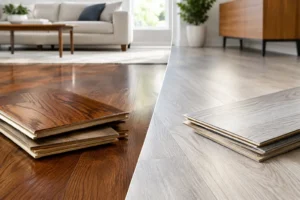
Luxury vinyl plank and tile are popular basement choices because they are water-resistant, durable, comfortable underfoot, and available in realistic wood and stone visuals. They work well in family rooms, playrooms, rental units, and finished basement hallways where easy cleanup is a priority.
Many vinyl products use click-lock installation, while others are glued down. A floating floor can be practical over an approved underlayment, but it still needs a flat, properly prepared slab. Glue-down vinyl can provide a stable, low-profile finish, yet the adhesive and moisture-control system must be selected carefully.
Water-resistant does not mean that every product can be installed over every damp slab without preparation. The installation instructions remain the deciding factor.
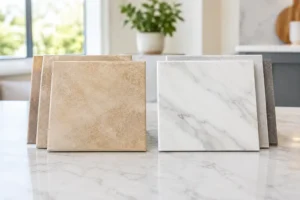
Ceramic and porcelain tile are among the most moisture-tolerant basement flooring options. They are highly durable, easy to maintain, and well suited to laundry rooms, bathrooms, entry areas, and spaces where occasional water exposure is a concern.
Tile does feel cooler and harder than vinyl or carpet, particularly over concrete. Area rugs, a suitable uncoupling system, or radiant heating can improve comfort where the project and budget allow. For a basement that needs long-term resilience and a timeless finish, tile is often a strong investment.
Engineered hardwood can bring warmth and natural character to a finished basement, but it is not the default choice for every below-grade project. It must be specifically approved by the manufacturer for basement installation, and the concrete must meet moisture requirements.
Compared with solid hardwood, engineered hardwood is more dimensionally stable because its layered construction better manages normal changes in humidity. Even so, standing water, excess vapor, or an uncorrected moisture problem can damage it. If you want a wood look but have uncertainty about basement moisture, luxury vinyl may offer greater peace of mind.
Modern laminate can deliver attractive wood visuals at an accessible price, and some products offer improved water resistance. However, laminate cores can swell when moisture enters joints or reaches the edges. This makes product selection and installation details particularly important in a basement.
Choose only a laminate rated for the intended location, use the approved underlayment, and keep the room within the recommended temperature and humidity range. Laminate can be a good fit for a dry, controlled basement, but it is less forgiving than tile or quality vinyl when moisture conditions are uncertain.
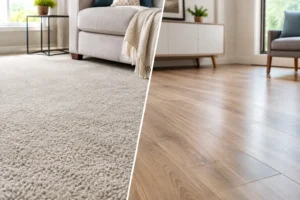
Carpet adds warmth, sound absorption, and comfort to a basement media room or bedroom. It is best reserved for basements with a verified moisture plan and no history of water intrusion. A moisture-resistant cushion or carpet tile system may offer practical advantages, especially where individual sections may need replacement.
Carpet is not a good choice for a basement that has recurring dampness, frequent leaks, or a risk of flooding. In those situations, a hard-surface floor with removable area rugs is usually easier to clean and recover after an issue.
Solid hardwood is generally not recommended directly over a below-grade concrete slab. Natural wood expands and contracts with humidity, and basement moisture can cause cupping, gaps, or permanent damage.
Some flooring products are marketed as waterproof, but that claim typically refers to the surface material, not the entire installation. Water can still travel beneath planks, around walls, and into subfloor layers. A waterproof surface is helpful, but moisture management below the floor remains essential.
A successful basement floor is a system, not just a box of planks or tile. The slab, moisture-control layer, underlayment or adhesive, flooring material, transitions, and perimeter details all need to work together.
For floating floors, allow for required expansion space around walls, posts, and fixed objects. Avoid trapping the floor tightly under cabinets or heavy built-ins unless the product instructions specifically allow it. For tile, use appropriate crack-isolation or uncoupling materials when conditions call for them. For glue-down floors, use adhesives designed for the moisture conditions documented during testing.
Basement humidity also deserves attention after installation. Keep indoor humidity within the flooring manufacturer’s recommended range, use a dehumidifier when needed, and maintain steady temperatures. Good ventilation, a reliable sump pump, and regular checks around windows and plumbing help protect the investment long after the installers leave.
Basement projects often involve questions that cannot be answered by looking at a flooring sample alone. Is the slab dry enough? Does a small crack need repair? Will a click-lock floor work with the existing ceiling height? Is tile worth the added preparation cost? These decisions affect the appearance, comfort, and lifespan of the finished space.
A flooring professional can help match the material to the conditions, explain preparation requirements, and install the complete system according to manufacturer standards. At Atlantis Tiles and Flooring, that process begins by understanding how you use the room, what your basement slab requires, and the style you want to bring into the space.
The right basement floor should feel like a natural extension of your home, not a compromise made because the room is below grade. Begin with an honest moisture assessment, then choose a flooring system built to handle the conditions beneath it.