- 613-421-0505
- info@atlantistilesandflooring.co
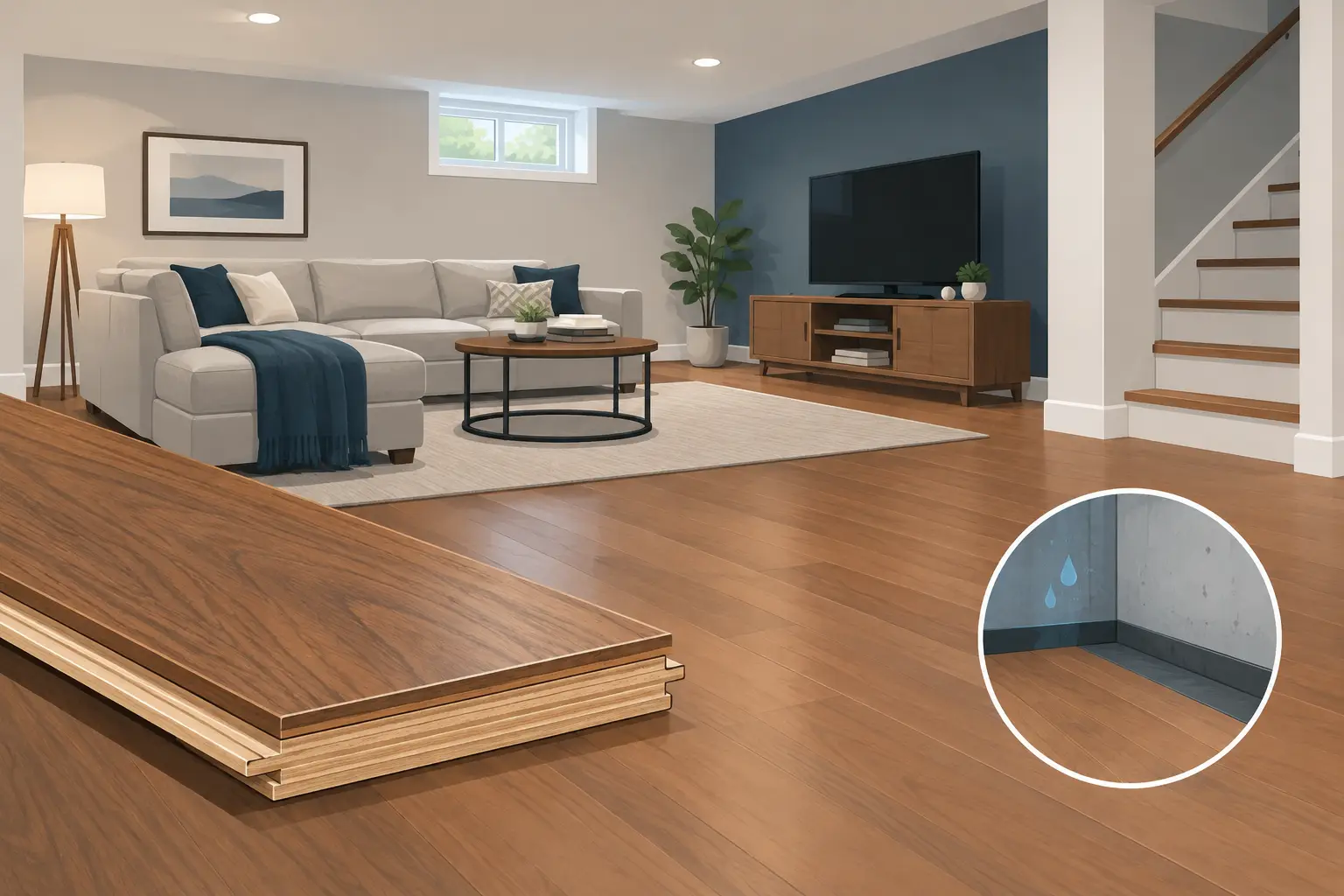
A finished basement can feel every bit as polished as the main floor, but it starts with a flooring decision that respects the room’s conditions. Engineered hardwood for basements can deliver the warmth, natural grain, and timeless style homeowners want without using solid hardwood where it may be vulnerable. The right product and preparation matter just as much as the color or plank width.
Basements often have cooler concrete slabs, shifting humidity, and a greater chance of moisture exposure than above-grade rooms. That does not automatically rule out a wood floor. It does mean the floor must be selected, tested, and installed with care.
Engineered hardwood has a real hardwood wear layer on top of a stable core made from layered wood material. The layers are arranged in alternating directions, helping the plank resist the seasonal expansion and contraction that can affect natural wood flooring.
That construction makes engineered hardwood more dimensionally stable than solid hardwood. In a properly prepared basement, it can be a beautiful choice for family rooms, home offices, rec rooms, bedrooms, and finished lower-level living areas. It brings visual continuity when you want the basement to coordinate with hardwood installed upstairs.
Still, “more stable” does not mean waterproof. Engineered hardwood is not the best choice for a basement with recurring water intrusion, an actively damp slab, a sump-pump issue, or a history of flooding. The floor can only perform as well as the space beneath it. Before choosing a product, address drainage, foundation cracks, plumbing leaks, and humidity concerns first.
A sample board can look perfect under basement lighting, but the most valuable information comes from moisture testing. Concrete contains moisture even when it appears dry, and vapor can move through a slab over time. Excess moisture may contribute to cupping, gapping, adhesive failure, or discoloration around the plank edges.
Professional installers evaluate the subfloor condition and use manufacturer-approved moisture tests to determine whether the slab is suitable for the product being considered. Results help guide the installation method and whether a moisture-control system is needed. Skipping this step to save time can turn an otherwise sound flooring investment into an expensive repair.
Humidity also deserves attention after installation. A basement should stay within the flooring manufacturer’s recommended indoor temperature and relative-humidity range throughout the year. In many homes, that means using air conditioning or a dehumidifier during humid months and avoiding prolonged periods of very dry heated air in winter.
A basement does not need to look wet to have a moisture problem. Musty odors, visible efflorescence on concrete, peeling paint near the foundation, damp carpeting, or condensation on pipes are all reasons to investigate further. If the slab has never been tested, or the basement has recently had a water event, postpone flooring installation until the source is corrected and the area has fully dried.
Not every engineered hardwood floor is designed for below-grade installation. Always check the manufacturer’s specifications instead of relying on the product category alone. Some products are approved for installation over concrete and below grade, while others are intended only for above-grade rooms.
Look closely at the thickness and quality of the wear layer. A thicker wear layer may allow refinishing in the future, depending on the product and its condition. For busy homes with children, pets, or frequent entertaining, a durable factory finish can be especially practical. Matte and low-sheen finishes tend to disguise small scratches and dust better than high-gloss surfaces.
Color and grain should suit the way the basement will be used. Light oak tones can make a lower-level room feel more open, while medium natural shades are forgiving with everyday traffic. Rich dark floors can create a dramatic look, but they often show dust, pet hair, and surface marks more readily. Wider planks offer a contemporary appearance, though narrower boards may feel more at home in traditional spaces.
If your priority is a floor that handles significant moisture exposure with minimal concern, luxury vinyl plank may be the better fit. Engineered hardwood is for homeowners who value the authentic appearance and feel of real wood and are prepared to manage the basement environment accordingly.
A concrete slab must be clean, structurally sound, and reasonably flat before installation begins. Old adhesive, paint, debris, and uneven areas can interfere with adhesive bonding or create movement beneath the boards. High spots may need to be ground down, while low spots may require an appropriate leveling material.
Depending on the product, the site conditions, and the manufacturer’s requirements, installation may include a moisture barrier, an adhesive with moisture-control properties, or an underlayment system. These materials are not interchangeable. The correct system must be matched to the flooring and installed according to the manufacturer’s specifications.
Door clearances, transitions to adjacent rooms, finished ceiling height, and baseboard details should also be considered early. A well-planned installation avoids awkward transitions and gives the room a finished, intentional appearance. If the basement is being renovated from the studs out, it is usually easier to coordinate flooring after moisture work, drywall, and painting are complete but before final trim is installed.
Engineered hardwood can be floated, glued down, or in some cases installed over an approved plywood subfloor. The ideal method depends on the specific flooring product and the condition of the basement.
A floating floor locks together over an underlayment and is not fastened directly to the slab. It can be efficient and may work well with approved products, but it needs proper expansion space at walls and fixed objects. A glued-down installation creates a solid feel underfoot and can reduce hollow sounds, though it requires careful slab preparation and a compatible adhesive.
Neither method is universally better. The manufacturer’s installation instructions should always lead the decision. Professional installation helps ensure details such as acclimation, expansion gaps, moisture protection, adhesive coverage, and transition pieces are handled correctly. Those details are where long-term performance is often won or lost.
Many engineered wood products need time to adjust to the home’s normal interior conditions before installation. The exact acclimation procedure varies by manufacturer, product construction, and local site conditions. Flooring should not be delivered into an unconditioned basement and installed immediately.
Keep the space enclosed, climate controlled, and at normal living conditions before, during, and after the project. This gives the wood the best opportunity to stabilize before it becomes part of the room.
Once installed, engineered hardwood is straightforward to maintain. Sweep or vacuum with a hard-floor setting regularly to remove grit that can dull the finish. Use a lightly damp microfiber mop and a cleaner approved for the floor’s finish. Avoid soaking the floor, steam mops, oil soaps, waxes, and harsh cleaners that can leave residue or damage the surface.
Wipe spills promptly, especially around beverage stations, pet areas, and exterior basement entrances. Use mats at doorways, felt protectors under furniture, and breathable rugs rather than rubber-backed mats that can trap moisture. If the basement has a bathroom, laundry area, or wet bar, choose a water-resistant flooring material in those zones or create a well-planned transition.
A dehumidifier is one of the simplest ways to support the floor in a humid basement. It also improves comfort in the room, protects furnishings, and helps prevent musty odors. The goal is not to make the space overly dry, but to keep conditions stable.
Engineered hardwood is an excellent basement flooring option when the space is dry, properly conditioned, and prepared to manufacturer standards. It is particularly appealing when you want real wood character, a refined finished look, and visual flow between levels of the home.
It may not be the right choice when water exposure is likely, humidity cannot be controlled, or the basement serves as a high-risk utility area. In those situations, waterproof vinyl flooring or tile can offer greater peace of mind while still providing a polished design.
The best next step is to evaluate the basement before falling in love with a particular plank. A professional assessment of the slab, moisture conditions, room use, and installation requirements can turn a beautiful flooring choice into one that continues to perform year after year.