- 613-421-0505
- info@atlantistilesandflooring.co
A floor can completely change how a room feels, but it also has to stand up to everyday life. When comparing hardwood versus laminate, the right choice usually comes down to more than appearance. Pets, children, moisture, sun exposure, budget, and how long you plan to stay in the home all matter.
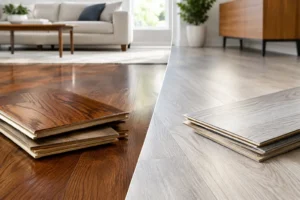
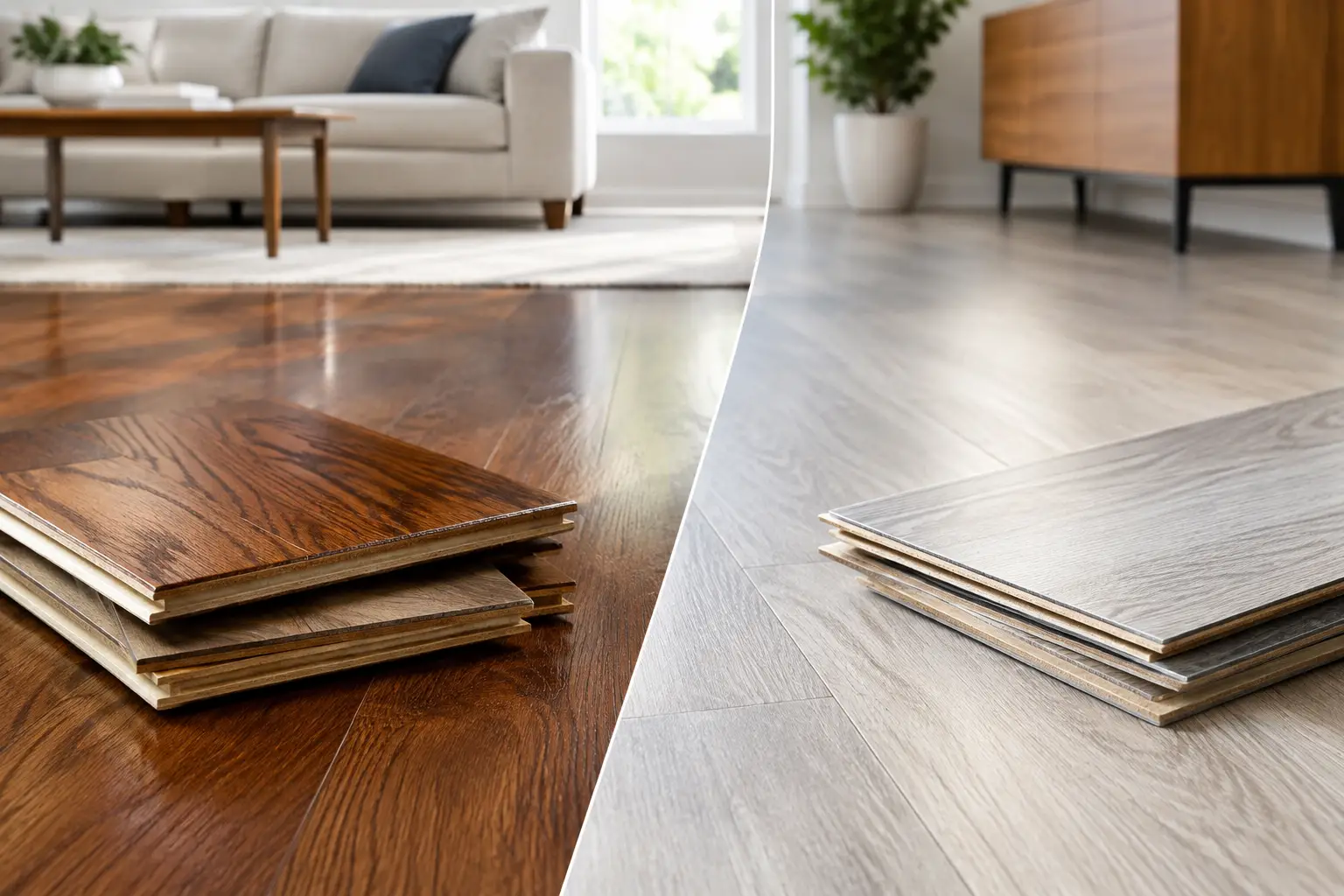
Both materials can create a polished, wood-inspired look. Hardwood offers natural character and long-term refinishing potential, while laminate provides practical durability and value for busy spaces. Understanding where each floor performs best helps you make a decision you will feel good about long after installation day.
Hardwood flooring is made from real wood. Solid hardwood is milled from one piece of timber, while engineered hardwood has a genuine hardwood surface layered over a stable core. Each plank has natural variation in grain, knots, and color, giving the floor a distinct appearance that cannot be perfectly repeated.
Laminate flooring is a manufactured product designed to replicate the look of wood, stone, or tile. It typically has a high-density core, a decorative image layer, and a protective wear layer. Modern laminate can look impressively realistic, including embossed textures that follow the pattern of the wood grain.
At first glance, the materials may seem similar. The difference becomes clearer over time. Hardwood develops a lived-in patina and can often be refinished. Laminate is highly resistant to everyday surface wear, but once it is badly damaged, the affected boards generally need replacement.
Hardwood brings warmth and depth that come directly from the material itself. Oak, maple, hickory, walnut, and other species each have their own grain pattern, hardness, and color range. Stains, plank widths, surface textures, and finishes create even more design options, from clean contemporary spaces to traditional homes with lasting character.
Because hardwood is a natural product, no two planks are exactly alike. That variation is often the point. It gives a living room, dining room, or primary bedroom a tailored, high-quality finish that works with changing furniture and décor over many years.
Hardwood can also be refinished when styles change. A floor that began with a warm stain may be sanded and updated with a lighter or more natural finish, depending on the product and its wear layer. This adaptability is a significant advantage for homeowners planning a long-term renovation.
Laminate has come a long way from the flat, repetitive patterns many people remember. Quality options now offer wide planks, convincing grain detail, textured surfaces, and colors ranging from pale Scandinavian-inspired oak to rich, rustic wood looks.
Laminate is especially useful when you want a coordinated look across several rooms without committing to the higher cost of real hardwood. It can also be a smart choice for rental properties, guest rooms, offices, and family spaces where the goal is an attractive floor with predictable costs.
The trade-off is authenticity. Laminate can closely resemble wood, particularly from a standing position, but it does not have the natural depth, feel, or individual variation of genuine hardwood.
For active households, durability is often the deciding factor. Hardwood is strong and long-lasting, but it is not indestructible. Pet nails, dropped cookware, furniture movement, and grit tracked in from outdoors can leave marks. Harder wood species and quality finishes improve resistance, but hardwood will still show wear over time.
Many homeowners see small dents and scratches as part of hardwood’s character. Others prefer a floor that looks more uniform under heavy daily use. If you have large dogs, young children, or a high-traffic entryway, consider the species, finish, and room location carefully rather than assuming every hardwood product will perform the same way.
Laminate is often the easier choice for scratch resistance. Its protective top layer is designed to handle regular foot traffic, toys, and pet activity. A quality laminate floor can be an excellent fit for busy family rooms, hallways, and bedrooms.
However, laminate has one major limitation: deep damage is difficult to repair. A chipped edge, swollen board, or heavily gouged plank cannot be sanded and refinished as hardwood can. Keeping extra material from the original installation is helpful, since replacement boards are easier to match when the product is still available.
Neither traditional hardwood nor standard laminate should be treated as carefree flooring for consistently wet conditions. Kitchens, powder rooms, laundry areas, and entryways require close attention to spills, humidity, and installation details.
Hardwood can work beautifully in kitchens when homeowners are prepared to wipe spills promptly, use mats near sinks, and maintain stable indoor humidity. Engineered hardwood is generally more dimensionally stable than solid hardwood and may be suitable for a wider range of installations. Still, it is not a substitute for flooring specifically designed for wet areas.
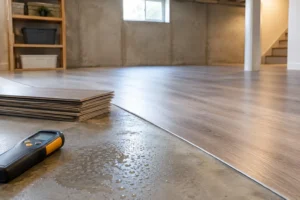
Standard laminate can swell if water reaches the seams or core. Water-resistant laminate products offer more time to clean up spills, but “water-resistant” does not always mean waterproof. Product specifications matter, particularly around tubs, exterior doors, and below-grade spaces.
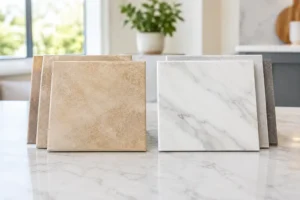
For bathrooms, basements with moisture concerns, or commercial environments that require frequent wet cleaning, another category such as luxury vinyl or ceramic tile may be more appropriate. Choosing the right material for the room is just as important as choosing the right color.
Laminate usually has a lower upfront material cost than hardwood, making it appealing when a project covers a large area or needs to stay within a firm budget. Installation can also be more straightforward with many click-lock laminate systems, although a properly prepared subfloor remains essential for a stable, quiet result.
Hardwood is typically a larger investment. Material pricing varies by species, plank width, grade, construction, and finish. Installation may involve more detailed preparation and labor, especially for nail-down solid hardwood or custom site-finished work.
The long-term calculation is different. A well-maintained hardwood floor can last for decades and may contribute to a home’s perceived value. Refinishing can extend its useful life rather than requiring a full replacement. Laminate may offer excellent value over its lifespan, but it is usually replaced rather than renewed when wear becomes significant.
The best value is not always the least expensive floor. It is the material that fits your expected use, maintenance habits, and plans for the property.
Hardwood needs regular sweeping or vacuuming with a hard-floor setting to remove abrasive dirt. Use cleaning products approved for the floor’s finish, clean spills promptly, and add felt pads beneath furniture. Avoid excessive water and steam mops, which can damage wood or force moisture into seams.
Laminate maintenance is similarly simple: sweep, vacuum carefully, and use a lightly damp microfiber mop when needed. Avoid soaking the floor and follow the manufacturer’s guidance for cleaners. Although laminate resists many common scratches, grit and standing water can still cause problems.
With either option, entry mats, area rugs in high-use zones, and prompt attention to spills go a long way. Professional installation also matters. Correct subfloor preparation, expansion spacing, transitions, and moisture protection help flooring perform as intended.
Choose hardwood if you want natural material, lasting visual character, and the possibility of refinishing in the future. It is especially compelling for main living areas, dining rooms, bedrooms, and homes where long-term value is a priority. Be prepared for a higher initial investment and normal signs of wear over time.
Choose laminate if you need a durable, budget-conscious wood look for an active household or a large renovation area. It is a practical option for rooms where scratch resistance and easy day-to-day care matter more than refinishing potential. Select a quality product with a wear rating and moisture performance suited to the room.
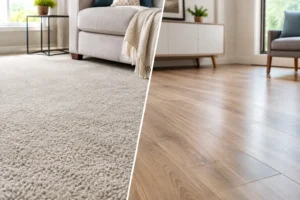
A mixed-flooring plan can also be the most practical answer. Hardwood may be right for the main floor and bedrooms, while laminate, vinyl, or tile can better serve spaces with greater moisture exposure or tougher daily use.
Before making a final choice, view full-size samples in your home and look at them in morning, afternoon, and evening light. A flooring professional can also assess your subfloor, room conditions, and installation requirements. Atlantis Tiles and Flooring can help turn those details into a floor that suits your home, timeline, and budget.
The floor you choose should support the way you actually live, not just the look you want on day one. When the material matches the room, your maintenance routine, and your expectations, the finished space feels right for years to come.