
- 613-421-0505
- info@atlantistilesandflooring.co

A new floor can make a condo feel larger, quieter, and more finished, but the wrong choice can create problems that are expensive to correct. A successful condo flooring renovation considers more than color and style. Building rules, sound control, subfloor conditions, moisture exposure, and transitions between rooms all shape the final result.
For condo owners, the best flooring plan is one that suits the space you live in every day while meeting the requirements of the building. Whether you are refreshing a rental unit, updating a dated kitchen, or renovating your entire home, careful planning protects your investment and helps your installation stay on schedule.
Before ordering material, review your condominium corporation’s renovation guidelines. Many buildings require written approval before flooring is removed or installed, particularly in high-rise properties. There may be restrictions on permitted working hours, elevator bookings, debris removal, insurance documentation, and contractor access.
Sound transmission is often the most important requirement. Hard surfaces such as hardwood, laminate, luxury vinyl, and tile can carry impact noise to the unit below. Your building may specify a minimum sound rating for the complete flooring system, not only the flooring itself. That means the underlayment, adhesive, and installation method matter just as much as the visible surface.
Ask for the required IIC and STC ratings if they are not clearly listed in the rules. IIC refers to impact noise, such as footsteps or moving chairs, while STC relates to airborne sound, including voices and television. A product may look ideal in a showroom but still fall short if it is installed with the wrong underlayment.
It is also wise to confirm whether your building allows glue-down flooring, floating floors, or nail-down hardwood. Concrete subfloors are common in condos and can limit certain installation methods. Receiving approval before materials arrive avoids delays, replacement costs, and difficult conversations with building management.
A consistent floor throughout an open-concept condo can create a clean, spacious look. Still, each room has different demands. The best material is usually the one that balances daily use, maintenance expectations, and the conditions below the floor.
Engineered hardwood is a strong choice for owners who want the warmth and character of real wood in a condo setting. Its layered construction offers greater dimensional stability than solid hardwood, which can be helpful over concrete subfloors and in spaces with seasonal humidity changes. It brings lasting visual value, although it needs protection from standing water and deep scratches.
Luxury vinyl plank is another practical option for busy households, pets, and rental properties. It is comfortable underfoot, available in convincing wood and stone visuals, and generally easier to maintain than hardwood. Many products are water-resistant or waterproof, but that does not eliminate the need to address subfloor moisture before installation.
Laminate can offer an attractive wood-look floor at a budget-conscious price. It performs well in dry living spaces and can resist everyday wear, but water can damage the core if spills are left unattended. Quality matters here. A well-made laminate with a suitable underlayment will feel and perform very differently from a low-cost product.
These spaces need a surface that can handle tracked-in moisture, spills, and frequent cleaning. Luxury vinyl tile or plank is a popular choice because it combines water resistance with a broad range of styles. Tile is another excellent option for wet areas, especially when durability and easy cleanup are the priorities.
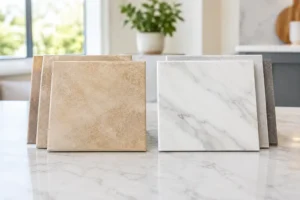
Ceramic or porcelain tile delivers a refined finish and performs well in high-traffic areas. It can feel cool and hard underfoot, however, so it may not be the preferred choice for every condo kitchen. Area rugs can add comfort, and radiant heat may be an option during a larger renovation, depending on the building and subfloor conditions.
Bathrooms call for materials that tolerate moisture without swelling, staining, or losing their shape. Porcelain and ceramic tile remain dependable choices, particularly when paired with properly installed grout and waterproofing details. Waterproof vinyl can also work well for a faster update, provided the perimeter and transitions are finished carefully.
Avoid assuming that a water-resistant product is suitable for every bathroom. The condition of the floor beneath it, the placement of the toilet, and protection around tubs or showers all influence long-term performance.
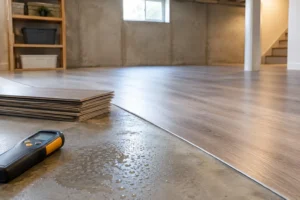
The finished floor is only as reliable as the surface beneath it. Condo subfloors are often concrete, and concrete can have uneven areas, cracks, moisture, or old adhesive that must be addressed before new material is installed.
Professional installers test for moisture where required by the flooring manufacturer. This step is especially important for engineered hardwood, laminate, and some vinyl products. Moisture that moves up through concrete can lead to cupping, gaps, adhesive failure, or mold concerns over time.
Levelness matters as well. A floating floor installed over dips or ridges may flex, separate at the joints, or develop hollow-sounding areas. Tile needs an especially flat, stable surface to prevent cracked grout or tiles. Proper leveling and preparation may add to the initial estimate, but it is far less costly than replacing a failed floor later.
Floor height should be considered early. New flooring can change the clearance beneath entry doors, interior doors, appliances, and closet doors. It can also create awkward transitions to existing tile or carpet. A thoughtful plan includes trim, reducers, thresholds, and door adjustments so the renovation looks intentional from room to room.
Condo renovations involve practical details that single-family homes may not. Reserve the service elevator, protect common areas, and understand where installers can park and unload materials. Some buildings require moving blankets, hallway protection, or a damage deposit before work begins.
Material acclimation may also be required. Hardwood and other products need time in the condo environment before installation so they can adjust to normal indoor temperature and humidity. Skipping this step can increase the risk of movement after installation.
If you are living in the unit during the project, plan for furniture moving, appliance access, and temporary room closures. In a full-condo installation, it may be more efficient to arrange alternate accommodations for a short period. A clear installation schedule helps minimize disruption and gives every trade enough room to do its work correctly.
A flooring budget should include more than the price per square foot. Underlayment, moisture barriers, leveling materials, trim, transitions, removal of existing flooring, furniture moving, waste disposal, and installation can all affect the final cost.
The least expensive product is not always the best value. A durable floor with a dependable warranty, proper preparation, and professional installation can reduce repair and replacement costs over its lifespan. On the other hand, premium hardwood may not be the best fit for a condo used as a rental or for a home with large pets and frequent spills. The right choice depends on how the space will be used.
A detailed estimate makes the comparison easier. It should identify the material, installation method, preparation work, and finishing details rather than presenting one unexplained total. This gives you a clearer view of where your budget is going and what is needed for a lasting result.
Condo flooring has little room for guesswork. An experienced flooring team can help match products to your building rules, room conditions, design preferences, and budget before installation begins. At Atlantis Tiles and Flooring, that guidance includes evaluating the full flooring system, from material selection and underlayment to finishing details and manufacturer-recommended installation methods.
Bring your condo guidelines, room measurements, and inspiration photos to your flooring consultation. With those details in hand, it becomes much easier to choose a floor that looks polished, feels right underfoot, and performs well long after the renovation dust has settled.
The best condo floor does more than update a room. It supports the way you live there, respects the people below you, and gives you a finished space you will be glad to come home to.