- 613-421-0505
- info@atlantistilesandflooring.co
A busy kitchen, a pet’s water bowl, and wet boots at the entry can quickly expose the limits of the wrong flooring. Understanding WPC flooring pros and cons helps you choose a surface that suits how your household actually lives, not just how a sample looks under showroom lighting. WPC can be an excellent choice for moisture-prone, high-traffic rooms, but its performance depends on the product, the room, and the installation details.
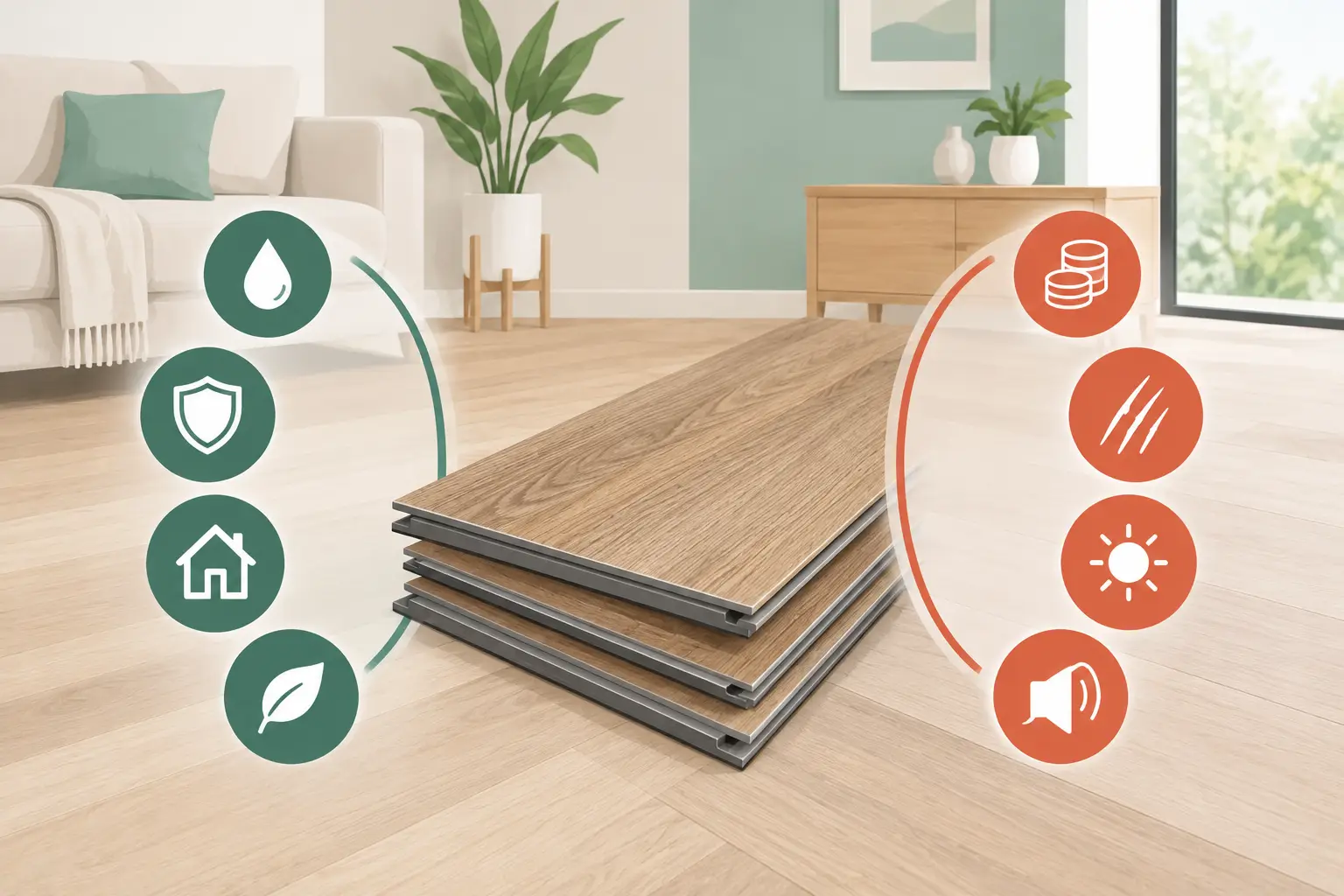
WPC stands for wood plastic composite, although the core does not behave like traditional wood flooring. It is a type of luxury vinyl plank or tile built in layers. Most WPC products include a protective wear layer, a realistic printed design layer, a waterproof composite core, and an attached backing for added cushion and sound reduction.
The core is what separates WPC from standard vinyl flooring. It is generally thicker and softer underfoot than many rigid-core alternatives, creating a more comfortable feel in living rooms, bedrooms, kitchens, and finished basements. Many styles also use click-lock edges that allow the floor to float over an approved, properly prepared subfloor.
WPC is often described as waterproof flooring. That is useful, but it needs context. The planks themselves are designed to resist water exposure, yet a major leak, standing water at edges, or moisture trapped below the flooring can still affect the subfloor, baseboards, and surrounding materials.
The strongest case for WPC is comfort plus moisture resistance. The main trade-off is that it is not as hard or heat-stable as every other rigid-core option. For many homes, that balance is worthwhile. For others, especially rooms with intense sunlight or heavy commercial traffic, another material may be a better fit.
Comfortable underfoot. WPC has more give than ceramic tile, hardwood, and many SPC vinyl floors. That can make a noticeable difference in kitchens where people stand for long periods, playrooms where children spend time on the floor, and basement family rooms that need a warmer feel.
Waterproof core construction. Spills from cooking, pet accidents, and everyday tracked-in moisture are far less concerning than they would be with solid hardwood or conventional laminate. Routine cleanup is simple: wipe up the spill, sweep or vacuum regularly, and use a manufacturer-approved cleaner when needed.
Realistic design options. Modern WPC flooring can recreate the look of oak, maple, stone, and tile with convincing grain, texture, and color variation. Wide planks can give an open-concept main floor a clean, contemporary appearance, while tile-look formats can suit bathrooms and laundry areas without the cold surface of ceramic.
Helpful sound and comfort benefits. The attached pad found on many WPC products can help soften footfall and reduce the hollow sound sometimes associated with floating floors. It is a practical feature for upstairs bedrooms, condos, rental properties, and homes with active families.
Less demanding installation than many hard surfaces. With the right subfloor preparation, WPC can often be installed more efficiently than nail-down hardwood or ceramic tile. Its floating installation system also makes it suitable for approved subfloors where a homeowner wants a finished result without a lengthy renovation schedule.
Easy everyday maintenance. WPC does not require sanding, refinishing, waxing, or sealing. A consistent cleaning routine and protective furniture pads will go a long way toward keeping it looking polished.
It can scratch and dent. WPC is durable, but it is not indestructible. Moving appliances, dragging heavy furniture, grit near exterior doors, and large dog nails can mark the wear layer or dent softer-core products. A quality wear layer, entry mats, felt pads, and prompt cleaning all help protect the floor.
Heat and direct sun can be a concern. Long periods of intense sunlight can cause expansion, fading, or movement in some vinyl floors. Large south-facing windows, sunrooms, and spaces with strong afternoon heat need special attention. Window coverings, manufacturer-approved installation methods, and choosing a product rated for the space matter more than the color alone.
It is not a repair-and-refinish floor. Hardwood can often be sanded and refinished after years of wear. A damaged WPC plank usually needs to be replaced instead. Keeping a box of extra material from the original production run is a smart precaution, particularly for larger installations.
Subfloor preparation still matters. A floating floor can hide minor visual imperfections, but it cannot correct a subfloor that is uneven, wet, loose, or structurally unsound. WPC may flex over dips, separate at joints, or show uneven wear if the subfloor does not meet the product’s specifications.
Price varies widely. Entry-level WPC can be cost-effective, while thicker products with premium visuals and stronger wear layers can approach the cost of engineered hardwood or quality tile. The best value is not always the lowest price per square foot. Consider the wear layer, warranty terms, plank thickness, installation requirements, trim, subfloor work, and expected lifespan.
WPC works especially well in homes that need a comfortable, low-maintenance surface with good moisture protection. Kitchens, finished basements, bedrooms, family rooms, hallways, laundry rooms, and rental units are common choices. It can also be a practical option for light commercial settings, such as offices or small retail spaces, when the selected product is rated for the traffic level.
Bathrooms require a closer look. WPC handles routine splashes well, but bathrooms have frequent moisture at the tub, toilet, and vanity. Careful perimeter detailing and prompt cleanup are essential. If the room experiences regular standing water or if a waterproof tiled shower area transitions directly onto the floor, porcelain tile may offer greater long-term security.
For an unfinished or potentially damp basement, addressing moisture at the concrete slab comes first. A waterproof plank does not solve a moisture problem below it. Testing the slab and following the flooring manufacturer’s moisture and underlayment requirements protects both the floor and the investment.
Compared with laminate, WPC offers much better protection against spills and humidity. Laminate can provide a hard, attractive surface at a lower price, but prolonged water exposure can cause swelling at the seams or core. If moisture is a regular part of daily life, WPC is usually the safer choice.
Compared with hardwood, WPC offers easier maintenance and better resistance to everyday water exposure. Hardwood brings natural character, can be refinished, and adds a timeless look that many homeowners value. The choice often comes down to priorities: authentic wood and long-term refinishing potential, or practical water resistance and simpler care.
Compared with SPC flooring, WPC is generally warmer and softer underfoot. SPC has a denser stone polymer composite core and is often more resistant to dents, temperature changes, and heavy traffic. That makes SPC worth considering for busy commercial spaces, homes with very large dogs, or rooms exposed to significant sun. WPC may feel more comfortable in quieter residential areas where cushioning matters most.
Compared with ceramic or porcelain tile, WPC is warmer, softer, and usually faster to install. Tile is exceptionally durable and performs well around water, but it can feel cold and hard underfoot, and it requires more involved installation. A kitchen renovation may favor WPC for comfort, while a shower-adjacent bathroom or heavily used entry may favor tile for maximum durability.
Even a premium WPC product can underperform when installation shortcuts are taken. The subfloor should be clean, dry, level, and structurally sound. Floor height transitions, expansion space around walls and fixed objects, door clearances, and trim pieces should all be planned before the first plank is installed.
Do not assume an extra underlayment is needed just because the flooring is floating. Many WPC products already include an attached pad, and adding another layer may interfere with the locking system or void the warranty. The manufacturer’s instructions should guide every decision, from moisture testing to layout direction and transition molding.
Professional installation is particularly valuable when a project involves uneven subfloors, stairs, multiple connected rooms, radiant heat, or a large open area. At Atlantis Tiles and Flooring, product selection and installation planning are approached together so that the finished floor meets both the design goal and the manufacturer’s requirements.
Do not select WPC based only on plank color. Ask about the wear layer, overall thickness, texture, warranty coverage, approved installation areas, and cleaning recommendations. A low-sheen, textured finish may disguise everyday dust and small marks better than a very smooth, glossy surface. Lighter tones can make a compact room feel open, while medium wood looks often provide the most forgiving choice for active households.
Also consider the room’s traffic and exposure. A quiet bedroom does not need the same performance level as a kitchen entry used by children, pets, and winter footwear. Matching the product to the room is one of the simplest ways to get lasting value from your flooring.
A WPC floor earns its place when comfort, easy care, and realistic style are high on your list. Before making a final choice, bring home samples, view them in your own light, and evaluate how the floor will perform through ordinary mornings, busy weekends, and the occasional unexpected spill.