- 613-421-0505
- info@atlantistilesandflooring.co
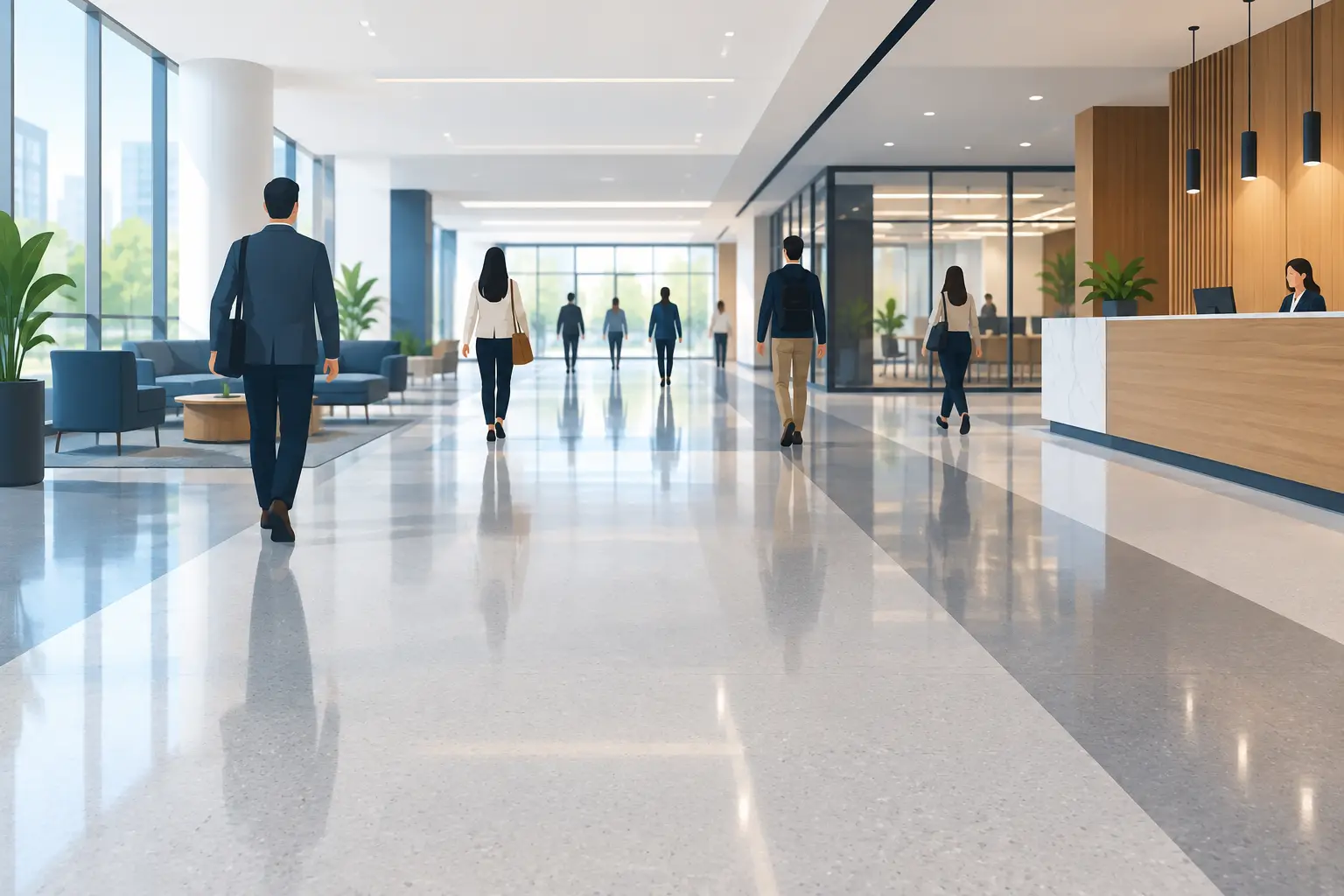
A busy floor tells the truth quickly. Scuffed entryways, worn traffic lanes, loose edges, and stains can make an otherwise well-managed property feel neglected. Choosing commercial flooring for high traffic areas means looking beyond a sample’s first impression and selecting a surface that can handle the real pace of your space: customers arriving, carts rolling, staff working, spills happening, and daily cleaning.
For offices, retail stores, clinics, restaurants, multifamily common areas, schools, and other active environments, the right floor must support the experience you want people to have. It should look polished, clean up efficiently, and continue performing long after installation day. The best choice depends on where the flooring will be used, how it will be maintained, and what kinds of traffic it will face.
“High traffic” is not one condition. A retail entry has different needs than a quiet office corridor, and a restaurant dining room has different risks than a medical reception area. Before comparing materials, consider the volume and type of movement in the space. Foot traffic matters, but so do rolling loads, furniture movement, moisture, grit from outdoors, dropped products, food spills, and cleaning routines.
Entryways and lobbies often take the most abuse because they collect dirt, water, salt, and small abrasive particles. In these areas, a hard-wearing surface and a well-sized walk-off mat system work together. Hallways and checkout areas need strong wear resistance, while break rooms, washrooms, and service counters need reliable moisture performance.
Appearance matters, too. A dark solid floor may show dust and scratches more readily than a patterned or textured finish. A pale surface can brighten a room but may need more frequent attention in a busy entrance. The goal is not to avoid cleaning altogether. It is to choose a finish and material that keep the space looking presentable with a realistic maintenance schedule.
A dependable selection process balances performance, design, installation requirements, and long-term operating cost. The least expensive product at the start is not always the best value if it requires early replacement or frequent repairs. At the same time, the highest-priced material is not automatically necessary for every room.
Look at the manufacturer’s intended use and warranty rather than relying on thickness or appearance alone. Commercial-rated products are designed and tested for specific conditions. Review wear layers, surface coatings, slip resistance where relevant, moisture limitations, and approved cleaning methods. If rolling equipment, heavy fixtures, or frequent furniture movement are expected, verify that the floor can accommodate them.
It is also wise to plan transitions, baseboards, stair details, and subfloor preparation before finalizing a product. A floor can be excellent on paper and still underperform if it is installed over an uneven, damp, or poorly prepared surface.
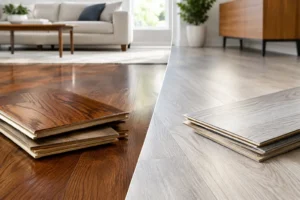
Luxury vinyl tile and plank are popular commercial choices because they combine durability, comfortable underfoot feel, and broad design flexibility. Available in wood, stone, concrete, and contemporary patterns, LVT and LVP can create a polished look without the maintenance demands of natural materials in certain settings.
A quality commercial vinyl floor with an appropriate wear layer can perform well in offices, retail spaces, clinics, corridors, and common areas. Many options resist stains and everyday scuffs, and they are generally easy to clean. For spaces exposed to frequent moisture, select a product rated for that use and follow the manufacturer’s installation requirements closely. Not every vinyl product is suitable for every wet environment.
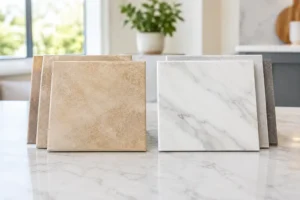
Porcelain and ceramic tile are among the strongest choices for entrances, washrooms, food-service areas, and other places where moisture resistance and easy cleaning are priorities. Porcelain, in particular, is dense and well suited to demanding commercial settings. It also offers exceptional design range, from classic stone looks to modern large-format styles.
Tile is a long-term material, but it is not without trade-offs. It can feel hard underfoot, which may be a concern where employees stand for long periods. Grout selection and maintenance also matter. A properly chosen grout color and professional installation help preserve a clean, finished appearance over time. For wet areas, texture and slip resistance should be considered as carefully as color and pattern.
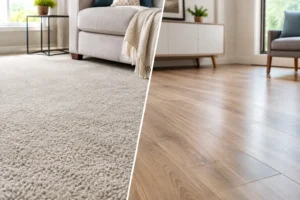
Carpet tile is a practical option for offices, meeting rooms, hospitality settings, and other spaces where acoustic comfort matters. It helps reduce footfall noise, adds warmth, and can make large workspaces feel more inviting. Patterned carpet tile can also disguise everyday soil better than broadloom carpet or a solid-color hard surface.
Its strongest advantage is repairability. When one section becomes stained or damaged, individual tiles can often be replaced rather than replacing the entire floor. Carpet tile is not the right choice for every entry or spill-prone area, but it can work especially well beyond the main entrance, where moisture and outdoor grit are controlled.
For healthcare spaces, education facilities, kitchens, and washrooms, sheet vinyl may be the right answer. Its continuous surface limits seams, making cleanup easier and reducing places where moisture can reach the subfloor. Safety-focused vinyl products can provide added slip resistance in locations where wet conditions are expected.
Sheet flooring requires skilled installation, particularly at seams, coved bases, and room edges. The finished result is highly functional when specified and installed correctly, but the subfloor must be properly prepared because imperfections can show through the material.
Laminate and engineered hardwood can be appropriate for selected commercial applications, particularly lower-moisture offices, boutiques, and professional spaces where a wood look supports the brand environment. Commercial-rated laminate can offer good scratch resistance, while engineered hardwood brings authentic warmth and a refined appearance.
Both require careful placement. Neither is usually the first choice for a wet entrance, washroom, or area with frequent spills. If wood or laminate is part of the design plan, placing it beyond the main entry zone and pairing it with a more moisture-resistant floor near exterior doors can protect the investment.
The areas that need the most attention are not always the largest. A narrow path from the entrance to a reception desk may wear faster than a large open room. Check-in stations, elevator lobbies, hallway corners, and service counters often develop visible traffic lanes first.
Use flooring layouts to support the room’s function. Tile patterns can define entry zones. Carpet tile can identify collaboration areas in an office. Vinyl plank direction can guide the eye through a retail space. In some projects, combining materials is the most practical solution: durable tile at the entrance, resilient vinyl in the main sales area, and carpet tile in quieter work zones.
Color and pattern can also do useful work. Mid-tone finishes, natural variation, and low-contrast patterns tend to hide day-to-day dust and minor marks better than flat, uniform surfaces. This is not about compromising style. It is about selecting a style that remains attractive between cleanings.
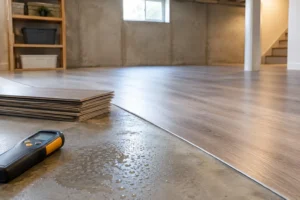
Commercial flooring performs best when installed to manufacturer specifications. That begins with assessing the subfloor for flatness, moisture, cracks, and contaminants. Moisture testing is especially important for products that are adhered to concrete or sensitive to humidity changes.
Professional installers also account for expansion space, adhesive selection, seam placement, transitions, and the conditions of the building during installation. Skipping these steps can lead to lifting edges, gaps, failed adhesive, cracked grout, or premature wear. A free estimate and site review can clarify what preparation is required before the project begins, helping avoid surprises once work is underway.
Schedule matters as well. Many commercial projects need phased installation, after-hours work, or a plan that keeps part of the business operating. Establishing those requirements early helps the installation team coordinate materials, preparation, and timing around your operations.
Even the most durable flooring benefits from consistent care. Dry soil is one of the most damaging elements in a busy building because grit acts like sandpaper under shoes and wheels. Effective entry mats, regular vacuuming or sweeping, and prompt spill cleanup make a meaningful difference.
Use cleaning products approved for the flooring type. Harsh chemicals, excess water, and abrasive pads can damage finishes or leave residue that attracts more dirt. For hard surfaces, routine damp mopping with the correct cleaner is usually more effective than occasional aggressive cleaning. For carpet tile, regular vacuuming and prompt spot treatment help preserve texture and appearance.
Atlantis Tiles and Flooring can help commercial property owners match flooring materials to traffic, maintenance expectations, design goals, and installation requirements. A floor should do more than survive a busy day. With the right material and professional preparation, it can keep your space looking capable, welcoming, and ready for the next one.