- 613-421-0505
- info@atlantistilesandflooring.co
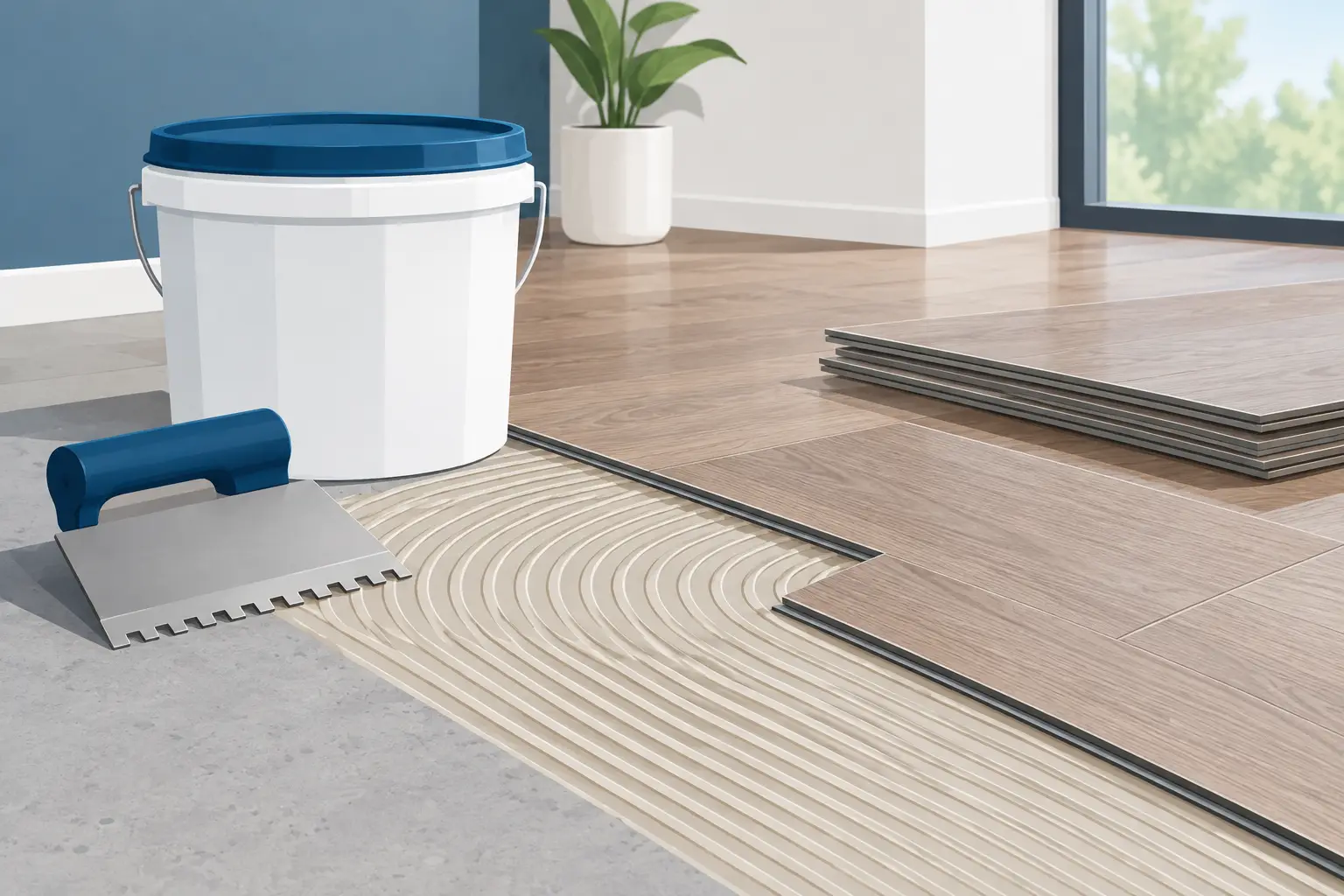
A beautiful vinyl floor can still fail if the material beneath it is wrong. Luxury vinyl tile and plank flooring adhesive does more than hold a floor in place: it supports the finished appearance, helps prevent shifting and curling, and contributes to long-term performance in busy homes and commercial spaces.
For gluedown luxury vinyl, the adhesive is part of the flooring system, not an afterthought. The right choice depends on the specific product, the condition of the subfloor, the room environment, and the installation method approved by the manufacturer. Taking time to get this step right protects your investment and helps the floor look polished for years.
Not every luxury vinyl floor is installed with glue. Click-lock and loose-lay products are designed for different methods, while gluedown luxury vinyl tile (LVT) and luxury vinyl plank (LVP) need an approved adhesive to create a secure bond with the subfloor.
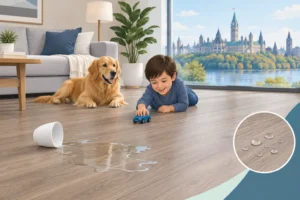
Gluedown flooring is often a practical choice for high-traffic settings. It can work particularly well in retail areas, offices, rental properties, hallways, and active family homes where a stable, low-profile floor is a priority. Because the material is bonded directly to the subfloor, it can provide a firm feel underfoot and resist movement caused by rolling loads, frequent foot traffic, or furniture use.
That said, glue is not automatically the best option for every project. A floating click-lock vinyl floor may be the better fit when an existing floor is suitable for installation, when speed is a major consideration, or when future removal is likely. The flooring product’s instructions should always determine the installation method. Using adhesive with a floor that was not designed for it can void the warranty and create unnecessary problems.
The product label and flooring manufacturer’s installation guide are the starting points. Adhesives are formulated differently, and a product that works well with one vinyl backing may not be approved for another. Adhesive chemistry, open time, moisture tolerance, and bond strength all matter.
Pressure-sensitive adhesive is a common option for many gluedown LVT and LVP products. It is applied, allowed to dry to the proper tack, and then used to hold planks or tiles in place. This approach can allow for cleaner installation and, in some cases, easier replacement of a damaged piece later. It is especially useful when the flooring manufacturer specifies a releasable or pressure-sensitive bond.
Hard-set adhesive creates a more permanent bond. It may be selected for areas with greater traffic demands or heavier loads when the manufacturer calls for it. The trade-off is that repair and removal can be more difficult. A permanently bonded floor should be installed carefully, with close attention to layout, adhesive spread rate, and working time.
Some adhesives are described as moisture-resistant or moisture-control products. These can be valuable over concrete slabs, but they are not a substitute for proper moisture testing or subfloor preparation. Concrete can release moisture even when it looks dry on the surface. If readings exceed the flooring or adhesive manufacturer’s limits, a separate moisture-mitigation system may be required before flooring installation begins.
The best adhesive is never simply the strongest one on the shelf. It is the one approved for the exact flooring product and matched to the conditions of the site.
Luxury vinyl is thin enough to reveal imperfections beneath it. Small dips, ridges, cracks, fastener heads, old adhesive residue, and uneven patches can telegraph through the finished surface. Adhesive cannot correct those issues. In fact, bonding vinyl over an unsuitable surface can make them more noticeable.
A prepared subfloor should be clean, dry, smooth, solid, and level within the flooring manufacturer’s stated tolerances. On a concrete subfloor, this may mean patching low spots, smoothing rough areas, removing contaminants, and testing moisture. On wood subfloors, installers need to address loose panels, protruding fasteners, gaps, and movement before applying adhesive.
Existing flooring also requires a careful assessment. Some surfaces may be acceptable to cover, but only if they are firmly bonded, smooth, clean, and approved by the vinyl flooring manufacturer. Soft carpet, unstable laminate, damaged flooring, and heavily textured surfaces are not reliable bases for gluedown vinyl. Removing the old material and preparing the subfloor can add time to a project, but it often prevents expensive corrections later.
Even the correct luxury vinyl tile and plank flooring adhesive can underperform when it is spread incorrectly. Installers use the trowel notch size specified by the adhesive manufacturer because it controls how much material reaches the floor. Too little adhesive can lead to weak bonding. Too much can cause adhesive to squeeze through joints, create visible marks, or extend drying time.
Timing is equally important. Most products have an open time, which is the period after application when flooring can be placed into the adhesive. They may also have a working time that tells installers how long the adhesive remains usable. Installing too soon can trap excess moisture or cause planks to slide. Waiting too long can reduce adhesion.
The floor should then be rolled with the recommended roller to transfer the adhesive evenly to the back of the vinyl. Edges, seams, and corners deserve extra attention because these are common areas for lifting if the bond is incomplete. Proper rolling is a practical step that helps create a clean, consistent finished surface.
Temperature and humidity also affect installation. Flooring, adhesive, and the job site should be acclimated as required by the manufacturer. Applying adhesive in a cold, overly humid, or poorly ventilated space can change its drying behavior. For basements, sunrooms, and rooms with large temperature swings, product selection and site conditions should be reviewed before installation begins.
Most adhesive-related flooring issues are preventable. Planks that curl at the edges, tiles that release, visible trowel lines, shifting seams, and adhesive residue on the face of the floor often trace back to poor subfloor preparation, incorrect adhesive selection, or missed timing during installation.
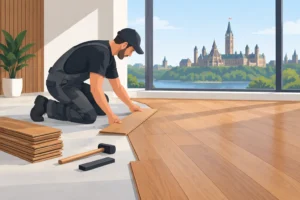
A professional installer begins before the first plank is placed. They inspect the subfloor, confirm the product requirements, plan the layout, and account for transitions, doorways, and perimeter details. That process is particularly valuable for larger rooms, commercial installations, concrete slabs, patterned tile layouts, and projects involving multiple flooring types.
It is also worth considering the total cost of a do-it-yourself installation. Adhesive, patching materials, moisture testing, trowels, rollers, floor preparation tools, and waste from placement errors can narrow the apparent savings. For a small, straightforward room, an experienced homeowner may be comfortable following the full manufacturer process. For a high-visibility or high-traffic floor, professional preparation and installation provide useful peace of mind.
Once installation is complete, follow the adhesive and flooring manufacturer’s guidance for traffic and cleaning. The floor may need time before furniture is moved back, and heavy items should be handled carefully during the early curing period. Premature traffic can disturb the bond before it reaches full strength.
For everyday care, use a soft broom or vacuum approved for hard floors, then clean with a manufacturer-recommended vinyl floor cleaner. Avoid harsh solvents, abrasive pads, and excessive water. Entry mats can reduce grit that dulls the finish, while felt pads beneath furniture help protect the surface from scratches.
A well-chosen vinyl floor can bring the look of wood, stone, or tile to kitchens, living rooms, offices, and other hardworking spaces without demanding complicated upkeep. The key is to treat the adhesive, subfloor, and installation method as one coordinated system.
Before purchasing materials, bring the room details, subfloor information, and flooring selection together with a knowledgeable flooring professional. Atlantis Tiles and Flooring can help match the right installation materials and approach to the way your space will actually be used, so the finished floor has the secure foundation it deserves.